

BLOG
Modacrylic vs. Meta-Aramid: Understanding the Differences in Flame-Resistant PPE
[ 03.11.2026]
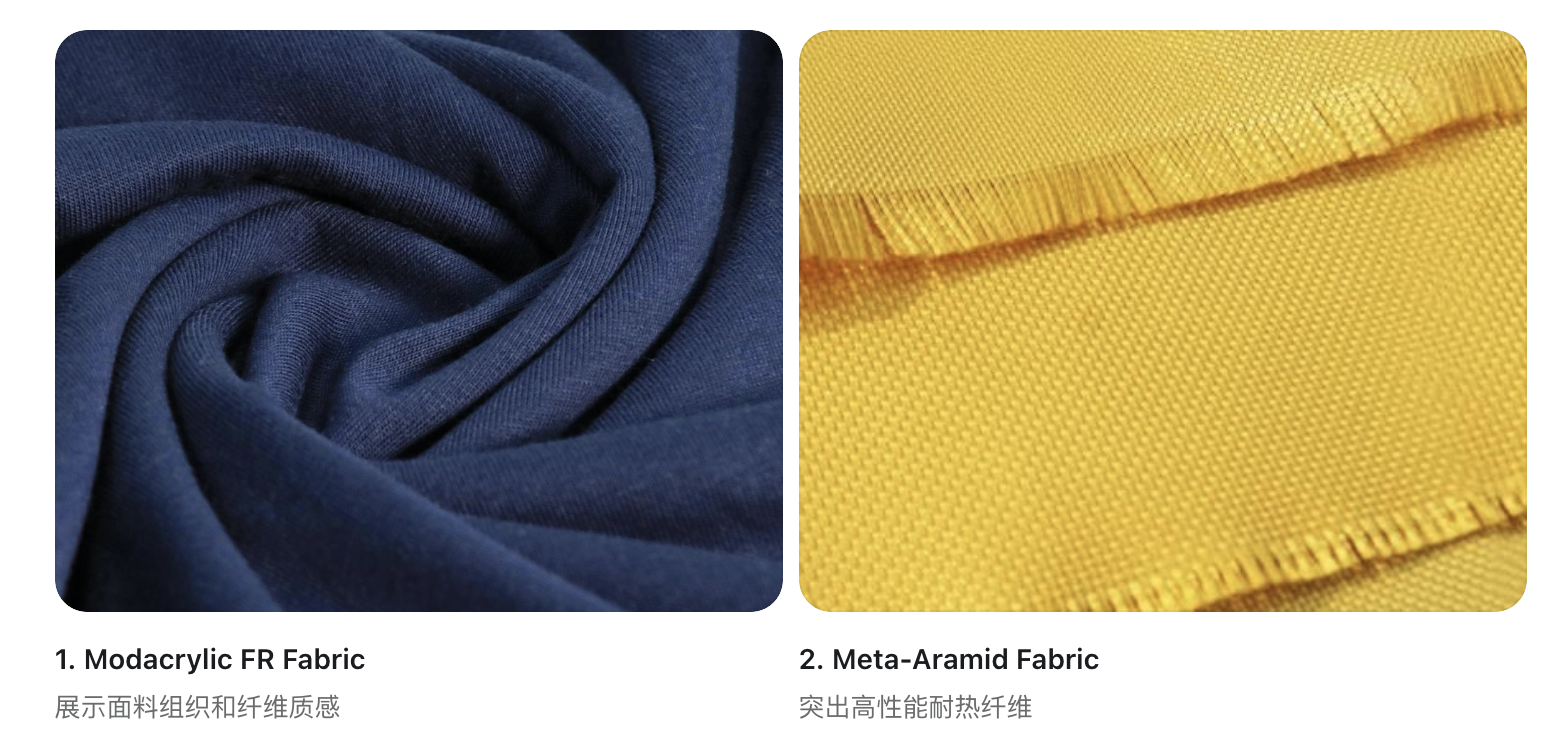
Modacrylic vs. Meta-Aramid: Understanding the Differences in Flame-Resistant PPE
Choosing the right fibre is essential when developing flame-resistant (FR) protective clothing. Among the most widely used inherently flame-resistant fibres in PPE, Modacrylic and Meta-Aramid each offer distinct properties and performance advantages.
Although both fibres provide inherent flame resistance, they differ significantly in thermal stability, comfort, processing characteristics and cost. Understanding these differences helps manufacturers develop protective garments that meet specific industrial requirements while balancing protection, comfort and performance.
In this article, we explore the key differences between Modacrylic and Meta-Aramid and explain how they are used in modern protective clothing.
1. What Is Mod acrylic?
Modacrylic is a modified acrylic fibre known for its inherent flame-resistant properties.
Unlike conventional fibres that require flame-retardant chemical treatments, Modacrylic incorporates flame resistance into its polymer structure.
Its key characteristics include:
-
Inherent flame-resistant properties.
-
Self-extinguishing behaviour under appropriate test conditions.
-
Good softness and wearing comfort.
-
Good colourability.
-
Compatibility with cotton, FR viscose and other functional fibres.
-
Suitability for lightweight knitted protective garments.
Modacrylic is widely used in FR workwear, protective underwear, balaclavas, base layers and other applications where comfort and flame resistance are important.
Its versatility also makes it an attractive option for developing different knitted fabric constructions.
2. What Is Meta-Aramid?
Meta-Aramid is a high-performance aromatic polyamide fibre designed for applications requiring excellent thermal stability.
It is widely recognised for its ability to maintain structural integrity under elevated temperatures.
Key characteristics include:
-
Excellent thermal stability.
-
Inherent flame resistance.
-
High resistance to heat exposure.
-
No melting or dripping under normal protective clothing exposure conditions.
-
Good mechanical performance.
-
Suitability for demanding thermal protective applications.
Meta-Aramid is commonly used in firefighter clothing, industrial protective garments, electrical arc protective clothing and other high-performance PPE applications.
Compared with Modacrylic, Meta-Aramid offers significantly better thermal stability, making it suitable for more demanding heat-protection requirements.
3. Modacrylic vs. Meta-Aramid: Key Differences
Although both fibres are inherently flame-resistant, their performance characteristics are different.
| Properties | Modacrylic | Meta-Aramid |
|---|---|---|
| Flame resistance | Inherent | Inherent |
| Self-extinguishing behaviour | Yes | Yes |
| Thermal stability | Moderate | Excellent |
| Heat resistance | Lower | Higher |
| Mechanical strength | Generally lower | Generally higher |
| Softness | Generally good | Good |
| Colourability | Generally good | More challenging |
| Blending flexibility | Excellent | Good |
| Raw material cost | Generally lower | Generally higher |
| Typical applications | FR base layers and workwear | High-performance thermal protection |
The actual performance of a textile depends not only on fibre selection but also on yarn construction, blend ratios, fabric structure and garment design.
4. Why Are These Fibres Used in Blended Fabrics?
In many PPE applications, manufacturers combine different fibres to achieve a better balance of protective performance, comfort and production cost.
For example, Modacrylic can be blended with cotton to improve wearing comfort, while Meta-Aramid can be incorporated to enhance thermal stability.
Common fibre combinations include:
Modacrylic / Cotton / Antistatic
A popular combination for FR knitted workwear and base layers. Modacrylic provides inherent flame resistance, cotton contributes to comfort and antistatic fibres help control electrostatic charge.
Modacrylic / FR Viscose
Combines inherent flame resistance with the softness and moisture-management characteristics of FR viscose.
Modacrylic / Meta-Aramid
Combines the flame-resistant properties of Modacrylic with the excellent thermal stability of Meta-Aramid.
The appropriate blend ratio should be determined according to the intended application, required protection level and relevant laboratory testing.
5. Which Fibre Is Better for Different PPE Applications?
There is no single fibre that is best for every protective clothing application. The choice depends on the hazards workers may encounter and the performance requirements of the finished garment.
| PPE Application | Suitable Fibre Direction |
|---|---|
| FR base layers | Modacrylic blends |
| FR underwear | Modacrylic blends |
| FR balaclavas | Modacrylic blends |
| FR knitted polo shirts | Modacrylic blends |
| Industrial FR workwear | Modacrylic or Meta-Aramid blends |
| Firefighter protective clothing | Meta-Aramid-based systems |
| High-temperature protective clothing | Meta-Aramid-based systems |
| Lightweight FR knitted garments | Modacrylic blends |
For lightweight protective base layers, Modacrylic blends offer an attractive balance between flame resistance, comfort and fabric versatility.
For garments exposed to more demanding thermal conditions, Meta-Aramid-based materials may be more appropriate.
Importantly, fibre selection alone does not establish the protection level of a garment. The complete textile and garment system must be evaluated against the applicable requirements.
6. The Importance of Fibre Selection in FR Knitted Base Layers
Protective clothing is not only about flame resistance. Comfort is equally important, especially for garments worn directly against the skin.
FR base layers are designed to be worn underneath outer protective clothing. They need to provide a comfortable wearing experience while contributing to the overall protective clothing system.
When developing FR knitted garments, manufacturers should consider several factors:
Fabric Weight: Lightweight constructions can improve comfort and reduce unnecessary garment bulk.
Moisture Management: Appropriate fibre combinations and fabric structures can help manage moisture during physical activity.
Fabric Construction: Single jersey, interlock and other knitted structures offer different properties in terms of stretch, breathability and dimensional stability.
Skin Comfort: Softness, flexibility and appropriate garment fit are essential for garments worn close to the body.
Protective Performance: The final fabric and garment must be tested to verify that they meet the required protective standards.
Modacrylic-based blends are particularly interesting for this category because they allow manufacturers to develop different yarn compositions and knitted structures to meet specific customer requirements.
7. How to Choose the Right Fibre for Your PPE Development
When selecting between Modacrylic and Meta-Aramid, manufacturers and PPE brands should consider the following questions:
-
What specific hazards will the garment protect against?
-
What level of thermal protection is required?
-
Is the garment designed as an outer protective layer or a base layer?
-
How important are softness, flexibility and moisture management?
-
What are the target fabric weight and garment cost?
-
Which international standards and testing requirements must be achieved?
A well-engineered fibre blend should be selected according to the complete application rather than simply choosing the fibre with the highest thermal resistance.
8. Keensun: Developing Innovative FR Knitted PPE Solutions
At Keensun, we specialise in the development and manufacturing of flame-resistant knitted fabrics and protective base layers for industrial applications.
Our product development focuses on combining carefully selected functional fibres with advanced knitting technologies to achieve a balance between protection, comfort and performance.
Our FR product range includes:
-
FR Long Sleeve Polo Shirts
-
FR Base Layers
-
FR Underwear
-
FR Balaclavas
-
FR Beanies
-
FR Neck Gaiters
By working with different fibre compositions, including Modacrylic, cotton, FR viscose and antistatic fibres, we develop knitted solutions tailored to different customer requirements.
We believe that effective protective clothing starts with the right material, the right fabric construction and a clear understanding of the end-use application.
Looking for a reliable manufacturing partner for FR knitted base layers?
Contact Keensun to discuss your next PPE fabric or garment development project.
Website: www.keensunsafety.com
Email: info@keensunsafety.com
Keensun – Your Partner in FR Knitted PPE Development.
[Back]