

BLOG
How Modacrylic Fibers Are Used in Modern PPE
[ 23.10.2026]
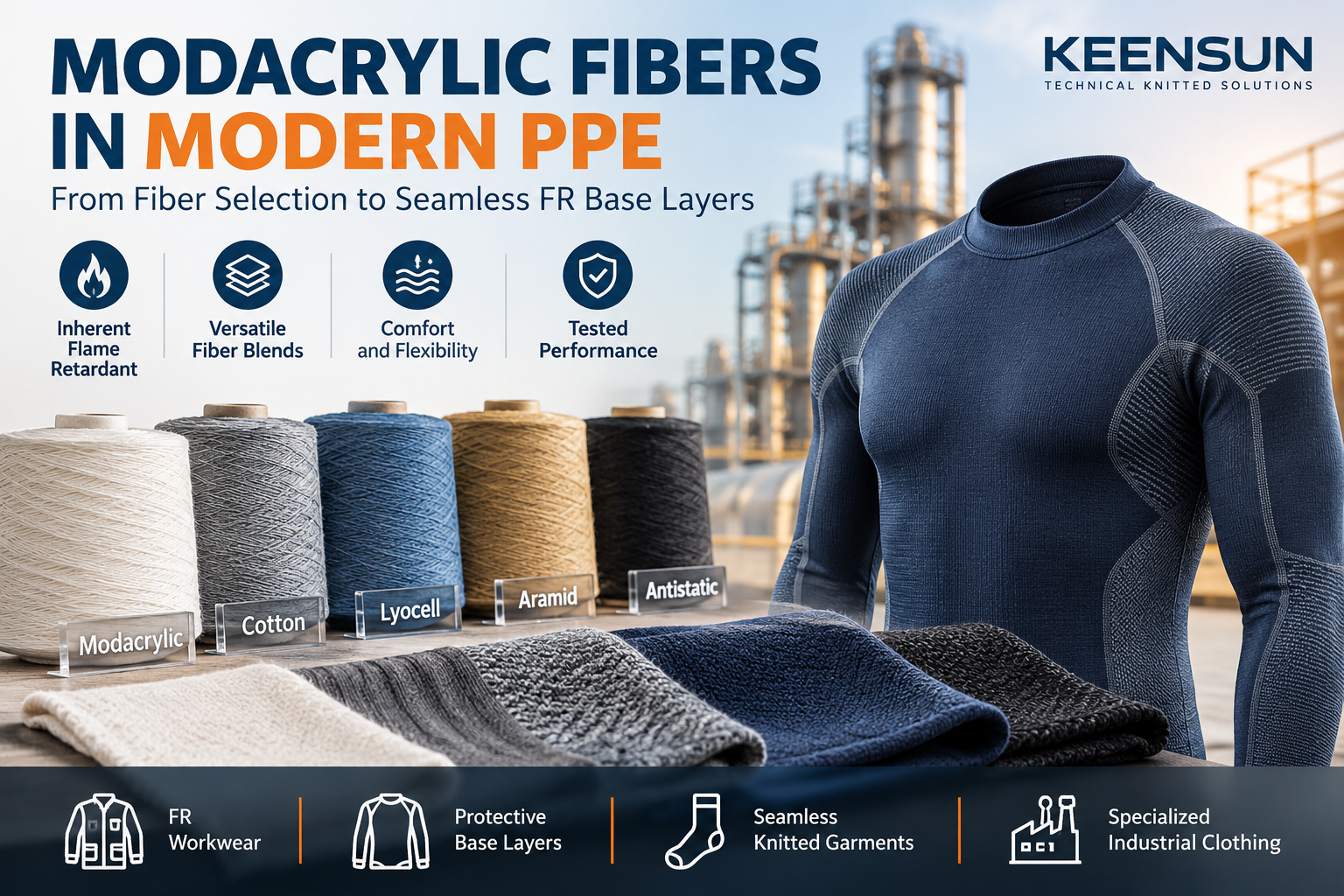 How Modacrylic Fibers Are Used in Modern PPE
Modacrylic fibers are widely used in flame-retardant (FR) protective clothing because of their inherent flame-retardant properties. When combined with other suitable fibers, they offer flexibility in developing protective fabrics for different industrial applications.
1. Inherent Flame-Retardant Properties
Modacrylic fibers have flame-retardant properties built into the fiber itself, making them a valuable option for developing FR workwear and protective clothing.
However, the performance of the finished garment must be verified through appropriate testing.
2. Versatile Fiber Blending
Modacrylic can be blended with different fibers to achieve specific fabric properties.
- Cotton: Adds softness and moisture absorption.
- Lyocell: Supports moisture management and wearer comfort.
- Aramid: Can contribute heat resistance and mechanical performance.
- Antistatic fibers: Help dissipate electrostatic charges when properly incorporated.
The right combination depends on the intended application and required performance.
3. Applications in Modern PPE
Modacrylic blended fabrics can be used in various protective clothing products, including:
- Flame-retardant workwear
- Protective base layers
- Seamless knitted garments
- Specialized industrial protective clothing
Fabric composition, weight, construction, and garment design must be selected according to the intended working environment.
4. The Role of Seamless Knitting
Seamless knitting technology enables manufacturers to create garments with fewer seams and engineered fabric structures.
For FR base layers, this technology can support a close fit, flexibility, and wearer comfort. Yarn selection and knitting parameters must be carefully controlled to maintain consistent fabric quality.
5. Quality and Protective Performance
Choosing the right fiber is only the first step. Buyers should also consider fabric specifications, production quality, and relevant test reports.
Depending on the application, standards may include EN ISO 11612 for protection against heat and flame, IEC 61482-2 for electric-arc thermal hazards, and EN 1149-5 for electrostatic properties.
Fiber composition alone does not guarantee compliance; the relevant requirements must be verified through appropriate testing and certification.
Conclusion
Modacrylic fibers provide a versatile foundation for modern protective clothing. Through careful fiber blending, technical knitting, and quality control, manufacturers can develop fabrics tailored to specific PPE applications.
At Keensun, we specialize in technical knitted fabrics and seamless FR base layers, supporting protective clothing projects with different fiber blends and fabric constructions.
Looking for a suitable FR base-layer solution?
Visit www.keensunsafety.com or contact info@keensunsafety.com to discuss your project.
Keensun — Technical Knitted Solutions for Protective Clothing.
[Back]