

BLOG
Modacrylic Fabric and EN ISO 11612: What PPE Buyers Should Know
[ 21.10.2026]
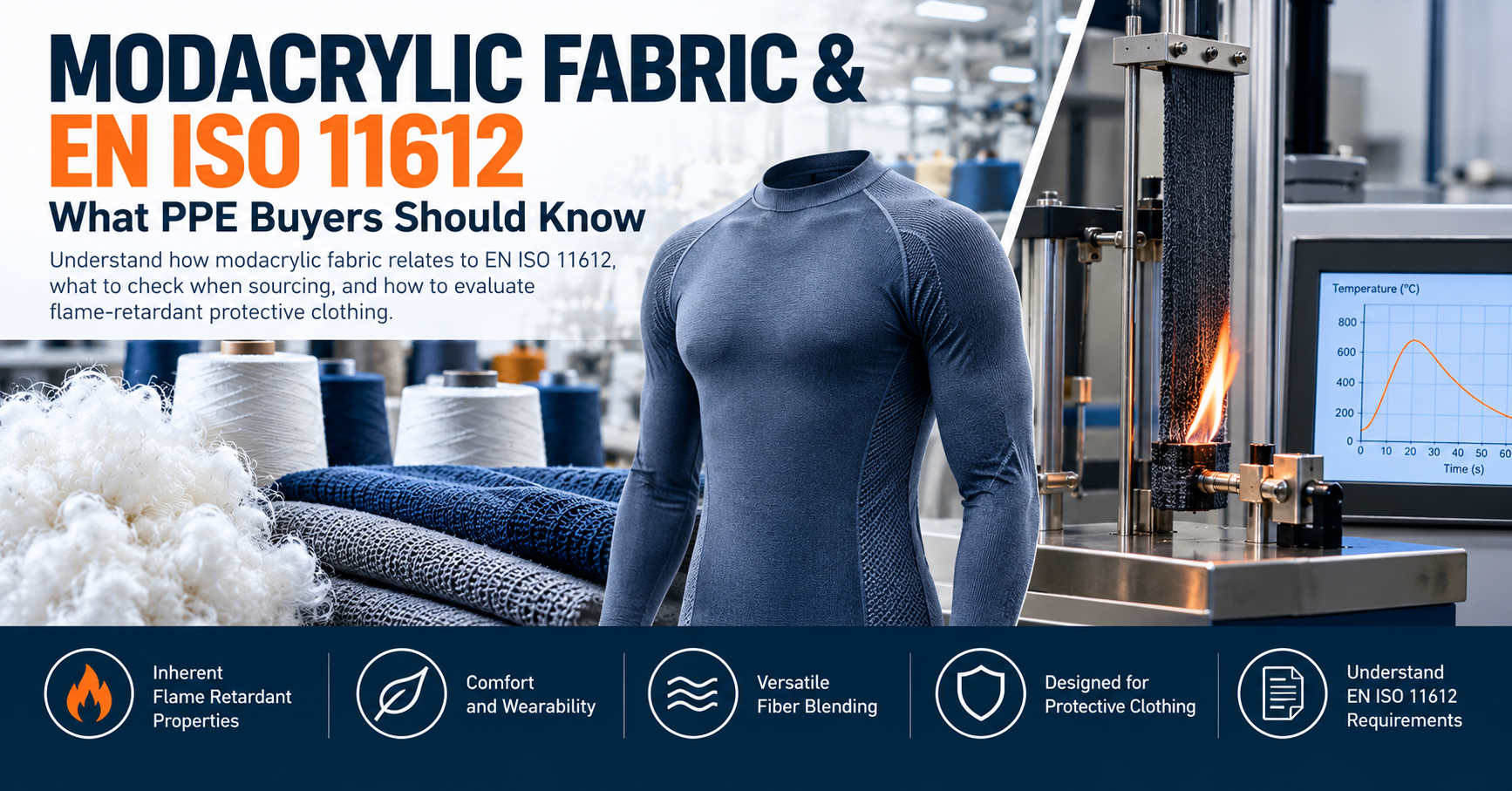
Modacrylic Fabric and EN ISO 11612: What PPE Buyers Should Know
Modacrylic fibers are widely used in flame-retardant (FR) protective clothing because of their inherent flame-retardant properties. However, when sourcing protective clothing, buyers need to understand how fiber selection relates to the performance requirements of the finished garment.
1. What Is Modacrylic Fabric?
Modacrylic is a synthetic fiber with inherent flame-retardant properties. It can be blended with different fibers, including cotton, Lyocell, aramid, and antistatic fibers, to achieve specific fabric characteristics.
Depending on the blend, these fabrics can be developed to balance flame resistance, comfort, moisture management, and other functional requirements.
However, the performance of a finished fabric depends on more than fiber composition alone.
2. What Is EN ISO 11612?
EN ISO 11612 is a European standard for clothing designed to protect the wearer against heat and flame.
Depending on the intended application, the standard covers different types of heat and flame exposure, including limited flame spread, convective heat, radiant heat, and contact heat.
The applicable performance requirements depend on the hazards the garment is designed to address.
3. Does Modacrylic Fabric Automatically Meet EN ISO 11612?
No. Although modacrylic has inherent flame-retardant properties, this does not automatically mean that every modacrylic fabric or garment complies with EN ISO 11612.
Performance depends on several factors, including:
- Fiber composition and yarn structure
- Fabric weight and construction
- Garment design and component selection
- Applicable test results and certification requirements
Buyers should request relevant test reports and confirm that the tested product matches the fabric or garment being supplied.
4. What Should PPE Buyers Check?
Before purchasing modacrylic FR protective clothing, consider the following:
Fiber composition: Confirm the exact fiber percentages and yarn specifications.
Fabric construction: Review fabric weight, knitting structure, and intended application.
Test reports: Check the applicable EN ISO 11612 performance requirements and supporting test results.
Product documentation: Verify that certificates and reports cover the relevant product and manufacturer.
Intended use: Ensure that the garment is suitable for the specific workplace hazards and protection requirements.
5. Why Consider Seamless FR Base Layers?
Seamless knitted base layers can provide a close fit with fewer seams and support freedom of movement under protective workwear.
By combining suitable modacrylic blends with appropriate seamless knitting structures, manufacturers can develop base layers designed to balance comfort and protective performance.
The finished garment must still be evaluated against the applicable requirements for its intended use.
Conclusion
Modacrylic is a valuable fiber option for flame-retardant protective clothing, but choosing the right product requires more than checking the fiber composition.
Understanding EN ISO 11612, reviewing product documentation, and verifying relevant test results help PPE buyers make better-informed sourcing decisions.
At Keensun, we develop technical knitted fabrics and seamless FR base layers using different fiber blends and fabric constructions for industrial protective clothing applications.
Looking for a suitable FR base-layer solution for your next PPE project?
Visit www.keensunsafety.com or contact info@keensunsafety.com to discuss your requirements.
Keensun — Technical Knitted Solutions for Protective Clothing.
[Back]